



-
What curriculum does BIBA use?
Early Years uses our self-designed Early Years curriculum.
Elementary School follows the American Common Core Standard and local Chinese curriculum.
Middle School follows the IBMYP and local Chinese curriculum.
High School uses IGCSE for the first two years (9 & 10) and IBDP/A-level for the last two years (11 & 12).
-
Where are the students from?
BIBA students are from different countries, such as China, USA, Canada, Mexico, Indian, Korea, Japan, Brazil, Ukraine, Australian, Italy, Macedonia, Malaysia, Spain, Germany, UK, New Zealand, Singapore, Columbia, Norway, the Netherlands, Denmark, Pakistan, Philippine, Hong Kong and Taiwan etc.
-
Where are the international teachers from?
There are over 300 staff members at BIBA, including almost 145 international teachers. They are from over 30 countries, such as USA, UK, Canada,the Netherlands, France, Brazil, Chile, Hungary, Columbia, India, Korea, Japan, New Zealand, Australia and Hong Kong etc. BIBA’s international teachers are qualified and have experience in education, they help to build the true international environment.
-
What is the founding background of BIBA?
BIBA was established in 2006 as a modern educational institution rooted in Chinese culture and guided by contemporary pedagogical principles. It champions a philosophy of ‘love and happiness’, fostering a vibrant, free-spirited, democratic and harmonious learning environment.
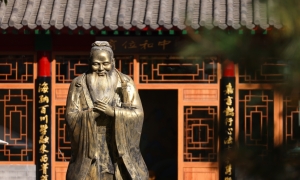
The school's name, 'BIBA', derives from the noble aspirations embodied in the phrase ‘embracing all rivers like the sea, and cherishing noble words and virtuous deeds'. Embracing all rivers signifies greatness and breadth; noble words and virtuous deeds represent beauty and goodness. This metaphorically signifies the pursuit of grand and beautiful education to nurture outstanding talents of great beauty. BIBA's vision is to become a model for bilingual education, deeply rooted in Chinese culture while embracing the world.
-
What core competencies does BIBA School aim to cultivate in children?
BIBA is a school that cultivates education with conscience and nurtures life with genuine affection: conscience as its foundation, profound love as its root. With a sincere and conscientious heart, it cultivates the fertile ground of education, returning to the essence of humanity. Hearts warm hearts, lives accompany lives, souls awaken souls. Teachers find joy in the act of teaching, while students experience the happiness of education. In this age of haste, BIBA steadfastly champions “slow education”. Every child matters; every life is extraordinary. This child-centred approach brims with beauty at every turn—witnessing the vitality and splendour of life, savouring the beauty of interaction within the educational journey, and anticipating the blossoming beauty of lives yet to unfold.
-
What curriculum system does the school adopt?
BIBA offers four pathways to global education during secondary school: IGCSE, IBDP, A-Levels, and the STP Dual Excellence Programme.
Dual-Track Programmes: IB and A-level curricula run concurrently, providing educational support for students pursuing diverse development pathways.
STP Dual Excellence Programme: Aiming for dual excellence in arts/sports and academics, we collaborate with leading international institutions to introduce curricula from Europe and America's premier arts academies, paving a solid path to the international stage for students with artistic or athletic talents.
Global Admissions Network:
Comprehensive coverage of niche European institutions with outstanding overall competitiveness, industry-leading acceptance rates, and average scholarships exceeding one million pounds per arts student.
Holistic Education Benchmark:
Empowering students through curricula tailored for admission to comprehensive universities and liberal arts colleges.
-
How does the school's curriculum balance the study of Chinese and English?
BIBA has consistently built upon the foundation of high-quality bilingual education, empowering children to express themselves confidently and communicate across cultures within a global context. Guided by a holistic educational approach, it cultivates six core competencies: communication, collaboration, critical thinking, innovation, self-management, and inquiry.
At primary level, BIBA employs immersive bilingual teaching to develop students' dual linguistic and cultural competencies.
In secondary education, the core curriculum centres upon the inquiry framework of the IB Middle Years Programme (MYP), seamlessly integrating the depth and rigour of the Chinese National Curriculum to form a distinctive dual-track academic advantage. Students undertake in-depth study across bilingual Chinese and English literature, dual-system mathematics, integrated science, and humanities and social sciences (including Chinese history).
-
How is the proportion of teaching languages allocated across different year groups in the school?
Nursery: Equipped with dual Chinese and foreign class teachers, providing an immersive bilingual environment
Primary School: Centred on the globally pioneering Science of Reading framework, integrated with UFLI's highly structured curriculum. We systematically guide pupils to utilise English within authentic contexts through close reading, graded reading, group discussions and creative writing, concurrently developing critical thinking and literary appreciation skills.
- 1
- 2